Home / News /
Building Connections Across Adult Systems: IHDD’s Lunch and Learn
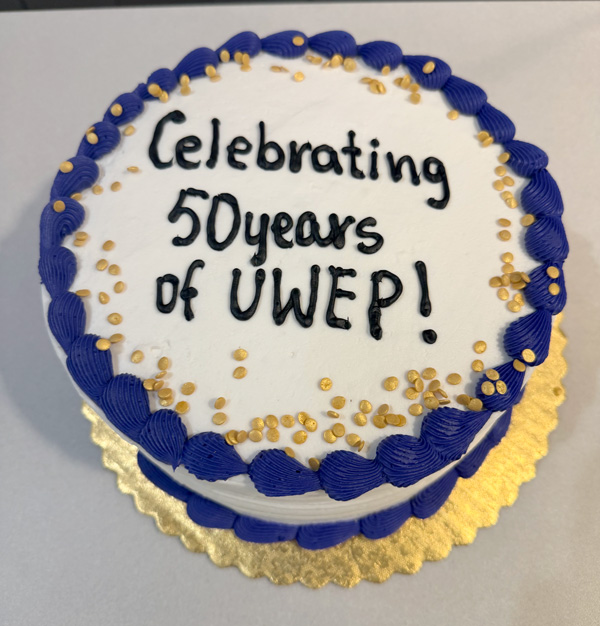 On October 19, we welcomed people with lived experience, researchers, providers, and community partners for our Fall Lunch & Learn, “Accessing Adult Systems.” Together, we explored barriers and opportunities in healthcare, education, and employment for people with intellectual and developmental disabilities (IDD). We also celebrated 50 years of the UW Employment Program (UWEP) and its work to advance inclusive employment.
IHDD Director Mark Harniss opened the day with an overview of adult systems and the “service cliff” many young people encounter when school-based supports end. Changing eligibility requirements and limited coordination can leave people and their families navigating disconnected services.
Jill, Alissa, and Alex McCormick brought these challenges into focus through their experiences with diagnosis, education, employment, and services. Their stories highlighted the value of practical transition support and opportunities that reflect each person’s interests, strengths, and goals.
Connecting health, education, and employment
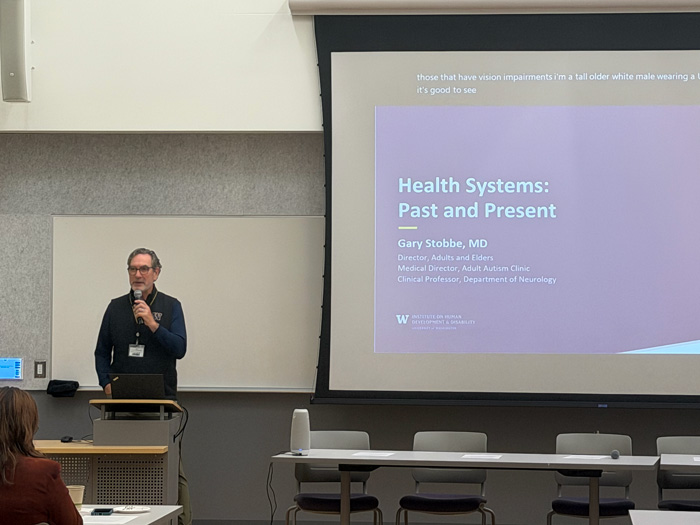 Gary Stobbe discussed the evolution of healthcare for adults with neurodevelopmental disabilities and the continuing need to expand access and provider training. He emphasized that wellness extends beyond medical care to relationships, meaningful activities, and community participation.
Kathleen Artman-Meeker, Director of the Haring Center for Inclusive Education, explored how education can prepare students for adulthood through transition planning grounded in their goals. Connecting with community agencies and adult services before leaving school can help students and families prepare for changes in support.
Katherine Bournelis, Director of UWEP, reflected on the program’s history, beginning with its first integrated job placement in 1976. Her presentation highlighted five decades of expanding employment opportunities, with agency, choice, and individual strengths at the center.
Looking ahead together
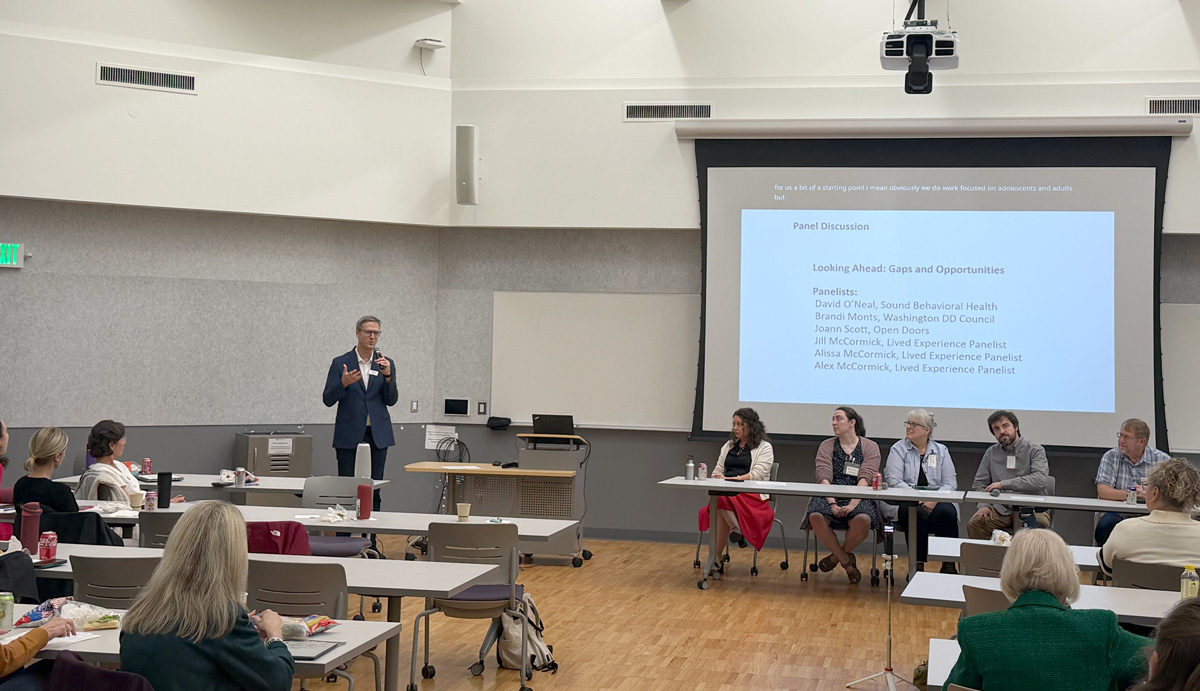
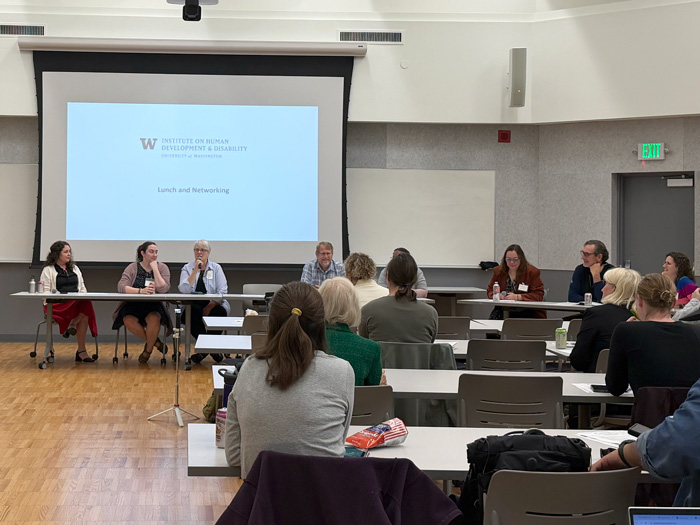 During the panel discussion, David O’Neal of Sound Behavioral Health, Brandi Monts of the Washington State Developmental Disabilities Council, and Joann Scott of Open Doors for Multicultural Families joined Jill, Alissa, and Alex McCormick. Stobbe, Artman-Meeker, and Bournelis co-moderated the conversation.
The discussion connected challenges in transportation and service coordination with the need for culturally responsive support. Panelists examined how disability intersects with race, poverty, and mental health, and emphasized that people with IDD should lead decisions about the services and policies that affect their lives.
Across the day’s conversations, a shared priority emerged: stronger connections across systems and more opportunities for people with IDD to shape their own futures.
Thank you to everyone who shared their experiences, questions, and expertise, and to the partners who helped bring this event together.