Home / Stories /
IHDD Researcher Spotlight: Dr. Farhin Ahmed – Exploring Brain–Behavior Relationships in Early Childhood Development
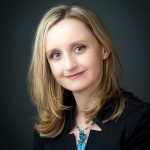
 At the intersection of engineering and neuroscience, Dr. Farhin Ahmed is advancing our understanding of how children’s brains and behaviors interact— work that holds promise for earlier diagnosis and more targeted interventions for neurodiverse populations. As a postdoctoral fellow in the Laboratory for Auditory Neuroscience and Development (LAND-Lab) at the University of Washington, she is dedicated to improving outcomes for children with different sensory and developmental needs.
Her academic journey began with a bachelor’s degree in electrical and electronic engineering. Drawn to how technology could help solve real-world problems, she found her way into biomedical research, a space that combines engineering techniques and neuroscience knowledge with a focus on translational impact. During her PhD in biomedical engineering, she studied multisensory processing in neurotypical adults, exploring how the brain integrates information from different sensory modalities.
In her current role, she focuses on infants and children, including both neurotypical and neurodiverse populations. She analyzes and compares neural responses to naturalistic stimuli between these groups, using EEG alongside behavioral assessments to examine how brain activity and observable behaviors relate to each other. This work helps model the brain–behavior relationship as children navigate the noisy world around them.
“What I love most about this work is its potential to create real change. Every study we run, and every data point we collect brings us closer to understanding how to better support kids who experience the world differently.” She adds, “The families who participate in our research are incredibly generous in sharing their time and stories, and those moments remind me why this research matters.”
She acknowledges that the work can be challenging. “Recruitment can be slow, and working with sensitive equipment and young children means things do not always go as planned. I have learned to stay patient and flexible, and to see every obstacle as part of the process.” Her advice to others starting out in this field: “Stay curious and keep asking questions. Even small discoveries can open the door to big change.”
Dr. Ahmed was born in Chittagong, Bangladesh, and received her BS from Bangladesh University of Engineering and Technology (BUET). She earned her MS and PhD from the University of Rochester, New York, and now lives in Seattle, Washington. Outside of work, she enjoys photography and spending time in nature. Most of her free time is happily claimed by her toddler, who keeps life playful and full of surprises.