Home / News /
2025-2026 IHDD Pilot Grant Recipients Announced
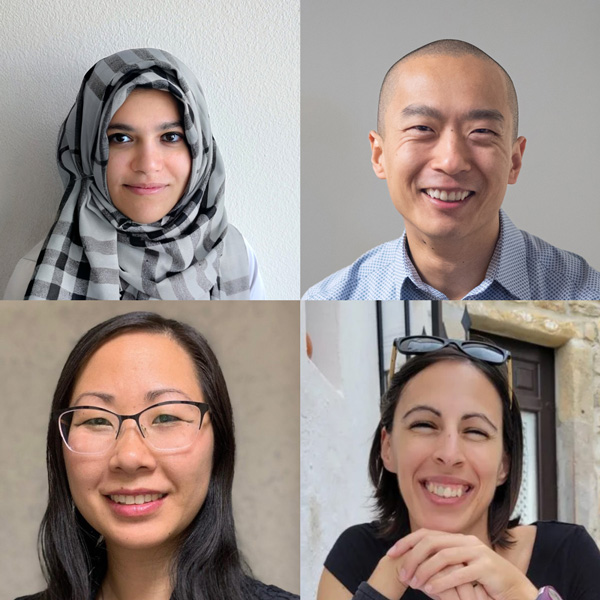 The UW IHDD has selected four recipients for the 2025-2026 Pilot Grant Program. Each project will receive $10,000 to support research in intellectual and developmental disabilities (IDD).
This year’s funded projects reflect a range of approaches, from basic science to clinical and community-based research.
2025-2026 IHDD Pilot Grant Recipients Announced
The UW IHDD has selected four recipients for the 2025-2026 Pilot Grant Program. Each project will receive $10,000 to support research in intellectual and developmental disabilities (IDD).
This year’s funded projects reflect a range of approaches, from basic science to clinical and community-based research.
The 2025-2026 IHDD Pilot Grant recipients are:
Farhin Ahmed, PhD
Department of Otolaryngology, University of Washington
Project title: Brain-based Markers of Listening in Autism
 Many autistic children struggle to understand speech in everyday, noisy settings such as classrooms or playgrounds. Yet standard hearing tests often show typical hearing. This mismatch suggests that current assessment protocols – largely based on caregiver report and standard audiological measures may miss important aspects of how autistic children experience real-world listening. Consequently, listening difficulties in autism often go unnoticed and unaddressed in interventions.
This project aims to address this gap by identifying brain-based markers to objectively detect and support listening challenges in autism. We will combine brain recordings with realistic listening scenarios to characterize how the brain processes different aspects of speech in autistic and non-autistic children. We will also test whether visual cues, delivered through augmented-reality technology, can serve as an intervention. In addition, we will map these brain-based markers onto standardized assessments of language and communication ability to identify brain-behavior relationships.
The findings from this study have the potential to establish objective neural markers that could complement clinical audiological evaluations, helping audiologists and clinicians better understand individual listening profiles in a highly heterogeneous population like autism while guiding more personalized interventions.
Farhin Ahmed, PhD
Department of Otolaryngology, University of Washington
Project title: Brain-based Markers of Listening in Autism
Many autistic children struggle to understand speech in everyday, noisy settings such as classrooms or playgrounds. Yet standard hearing tests often show typical hearing. This mismatch suggests that current assessment protocols – largely based on caregiver report and standard audiological measures may miss important aspects of how autistic children experience real-world listening. Consequently, listening difficulties in autism often go unnoticed and unaddressed in interventions.
This project aims to address this gap by identifying brain-based markers to objectively detect and support listening challenges in autism. We will combine brain recordings with realistic listening scenarios to characterize how the brain processes different aspects of speech in autistic and non-autistic children. We will also test whether visual cues, delivered through augmented-reality technology, can serve as an intervention. In addition, we will map these brain-based markers onto standardized assessments of language and communication ability to identify brain-behavior relationships.
The findings from this study have the potential to establish objective neural markers that could complement clinical audiological evaluations, helping audiologists and clinicians better understand individual listening profiles in a highly heterogeneous population like autism while guiding more personalized interventions.
Yijie Geng, PhD
Department of Environmental and Occupational Health Sciences, University of Washington
Project title: Interactions Between Nitric Oxide and Class I HDACs as a Mechanism of Epigenetic Dysregulation in Neurodevelopment and ASD
 Our pilot project explores how environmental exposures may disrupt early brain development and contribute to autism spectrum disorder (ASD). The Geng lab’s previous work showed that exposure to a common pesticide, chlorpyrifos, can cause lasting social behavior deficits in zebrafish, which can be reversed by histone deacetylase (HDAC) inhibitors such as butyrate. We also found that this pesticide exposure alters gut bacteria in ways that increase production of nitric oxide (NO), a molecule that, at high levels, can interfere with normal brain development. We propose that excess NO disrupts the balance of class I HDAC activities, leading to abnormal patterns of gene activity important for brain function and social behavior.
This project will test how NO reshapes the epigenetic landscape through modulating HDAC activity, and whether these changes can be corrected by HDAC inhibitors. By uncovering how environmental factors, gut biology, and gene regulation interact, this work aims to identify a common biological pathway underlying ASD risk. Ultimately, these insights could help guide new strategies for early intervention or treatment by targeting epigenetic and metabolic pathways.
Yijie Geng, PhD
Department of Environmental and Occupational Health Sciences, University of Washington
Project title: Interactions Between Nitric Oxide and Class I HDACs as a Mechanism of Epigenetic Dysregulation in Neurodevelopment and ASD
Our pilot project explores how environmental exposures may disrupt early brain development and contribute to autism spectrum disorder (ASD). The Geng lab’s previous work showed that exposure to a common pesticide, chlorpyrifos, can cause lasting social behavior deficits in zebrafish, which can be reversed by histone deacetylase (HDAC) inhibitors such as butyrate. We also found that this pesticide exposure alters gut bacteria in ways that increase production of nitric oxide (NO), a molecule that, at high levels, can interfere with normal brain development. We propose that excess NO disrupts the balance of class I HDAC activities, leading to abnormal patterns of gene activity important for brain function and social behavior.
This project will test how NO reshapes the epigenetic landscape through modulating HDAC activity, and whether these changes can be corrected by HDAC inhibitors. By uncovering how environmental factors, gut biology, and gene regulation interact, this work aims to identify a common biological pathway underlying ASD risk. Ultimately, these insights could help guide new strategies for early intervention or treatment by targeting epigenetic and metabolic pathways.
Thanh Nguyen, PhD
Department of Pediatrics, University of Washington
Project title: CASCADES School-Based Autism Assessment – A Pilot Process and Outcome Evaluation
 This project evaluates CASCADES, a WA INCLUDE program that helps students receive autism evaluations through their schools instead of waiting for clinic appointments. Many children from underserved backgrounds face long delays in diagnosis due to barriers like limited access to providers, transportation challenges, and complex systems.
CASCADES partners schools with clinicians to bring diagnostic services directly into school settings. This approach aims to reduce wait times and make the process more accessible for families.
The study will examine how well the program works by gathering feedback from school-based providers and analyzing how quickly students receive diagnoses compared to traditional clinic pathways. It will also begin building a system to track services students receive after diagnosis, such as school supports and therapies.
This work addresses disparities in autism diagnosis, which can delay access to early support. Findings will help determine whether school-based models like CASCADES can improve access to care and better support underserved children and families.
Thanh Nguyen, PhD
Department of Pediatrics, University of Washington
Project title: CASCADES School-Based Autism Assessment – A Pilot Process and Outcome Evaluation
This project evaluates CASCADES, a WA INCLUDE program that helps students receive autism evaluations through their schools instead of waiting for clinic appointments. Many children from underserved backgrounds face long delays in diagnosis due to barriers like limited access to providers, transportation challenges, and complex systems.
CASCADES partners schools with clinicians to bring diagnostic services directly into school settings. This approach aims to reduce wait times and make the process more accessible for families.
The study will examine how well the program works by gathering feedback from school-based providers and analyzing how quickly students receive diagnoses compared to traditional clinic pathways. It will also begin building a system to track services students receive after diagnosis, such as school supports and therapies.
This work addresses disparities in autism diagnosis, which can delay access to early support. Findings will help determine whether school-based models like CASCADES can improve access to care and better support underserved children and families.
Ana Santos, PhD
Seattle Children’s Research Institute
Project title: Defining the Impact of Human Variants on Cerebellar Development
 Cerebellar hypoplasia is a developmental condition characterized by a small, underdeveloped cerebellum, leading to motor difficulties, speech delay, and intellectual disability. We previously identified variants in PDGFRB associated with cerebellar hypoplasia. The variants also cause Kosaki Syndrome. However, the mechanism by which these variants lead to cerebellar hypoplasia remains unclear. Using a mouse model, our preliminary data shows that mice carrying specific PDGFRB variants have significantly smaller cerebelli while the vasculature appears unaffected, suggesting the primary defect originates in the meninges rather than vascular or mural cells. Therefore, we hypothesize that PDGFRB variants impair granule cell development through direct effects on the cerebellar meninges.
To test this, we will use spatial transcriptomics to map gene expression changes in meningeal and cerebellar progenitor populations at single-cell resolution, enabling identification of migration defects and transcriptomic signatures driving cerebellar hypoplasia.
This work will not only deepen our understanding of Kosaki Syndrome, but more broadly, of the mechanisms linking meningeal dysfunction to intellectual disability. Ultimately, this could inform potential therapeutic strategies during a critical window of brain development.
Ana Santos, PhD
Seattle Children’s Research Institute
Project title: Defining the Impact of Human Variants on Cerebellar Development
Cerebellar hypoplasia is a developmental condition characterized by a small, underdeveloped cerebellum, leading to motor difficulties, speech delay, and intellectual disability. We previously identified variants in PDGFRB associated with cerebellar hypoplasia. The variants also cause Kosaki Syndrome. However, the mechanism by which these variants lead to cerebellar hypoplasia remains unclear. Using a mouse model, our preliminary data shows that mice carrying specific PDGFRB variants have significantly smaller cerebelli while the vasculature appears unaffected, suggesting the primary defect originates in the meninges rather than vascular or mural cells. Therefore, we hypothesize that PDGFRB variants impair granule cell development through direct effects on the cerebellar meninges.
To test this, we will use spatial transcriptomics to map gene expression changes in meningeal and cerebellar progenitor populations at single-cell resolution, enabling identification of migration defects and transcriptomic signatures driving cerebellar hypoplasia.
This work will not only deepen our understanding of Kosaki Syndrome, but more broadly, of the mechanisms linking meningeal dysfunction to intellectual disability. Ultimately, this could inform potential therapeutic strategies during a critical window of brain development.
The IHDD Pilot Grant Program supports early-stage research that can lead to larger external funding and long-term impact. Projects are selected through a competitive review process.
This year’s pilot grants are supported by Foundry10.
For more information about the IHDD Pilot Grant Program, please visit the application page.