Home / News /
UWEP Marks 50 Years of Inclusive Employment
From a campus restaurant training program to individualized employment services across the community, UWEP has spent five decades expanding opportunities for people with disabilities.

The University of Washington Employment Program (UWEP) is celebrating 50 years of helping people with disabilities prepare for, find and succeed in meaningful employment.
Today, UWEP works with adolescents and adults with developmental, physical, and cognitive disabilities. The program provides individualized assessment, job development and matching, on-the-job training, and long-term follow-up. Its employment specialists also work with businesses to identify employment needs, develop effective accommodations, and support employees after they are hired.
The program’s approach has evolved significantly since 1976, but its central purpose has remained consistent: to connect people with disabilities and employers in ways that benefit both.
A restaurant became a training ground
UWEP began as the Food Service Vocational Training Program at what was then the UW Child Development and Mental Retardation Center, now the Institute on Human Development and Disability. The program was developed in the mid-1970s, and its first documented job placement occurred in March 1976.
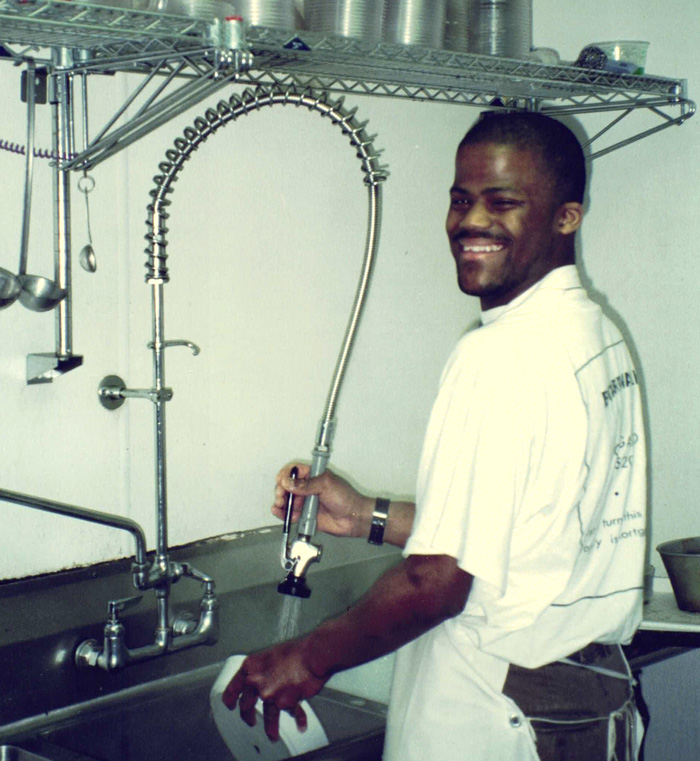
Mr. Shonta Daniels, a UWEP client, working at Pasta & Co. in Seattle.
Training began at the Center Restaurant, a cafeteria on the UW campus. Participants learned dishwashing, clearing tables, and kitchen maintenance while serving hundreds of lunchtime customers. The real-world setting allowed instructors to break complex jobs into teachable steps and help trainees build speed, consistency, and independence under conditions similar to those they would encounter in the workplace.
The curriculum extended beyond food-service tasks. Archival program materials describe instruction in punctuality, communication, grooming, money management, and public transportation. Participants progressed from the Center Restaurant to higher-volume UW cafeterias before moving into paid jobs with Seattle-area employers.
Support continued after placement. Staff analyzed each job, oriented supervisors, and coworkers, and initially worked alongside the new employee. As the employee gained skill and confidence, that support gradually decreased, while staff remained available when responsibilities, supervisors or jobs changed.
Early results challenged expectations
The program entered a labor market in which many people with intellectual disabilities had been excluded from competitive employment. An account of the program’s first year reported that 100 prospective employers surveyed in 1975 were initially cautious about interviewing graduates. Within a little more than a year, however, 15 employers had hired program graduates.
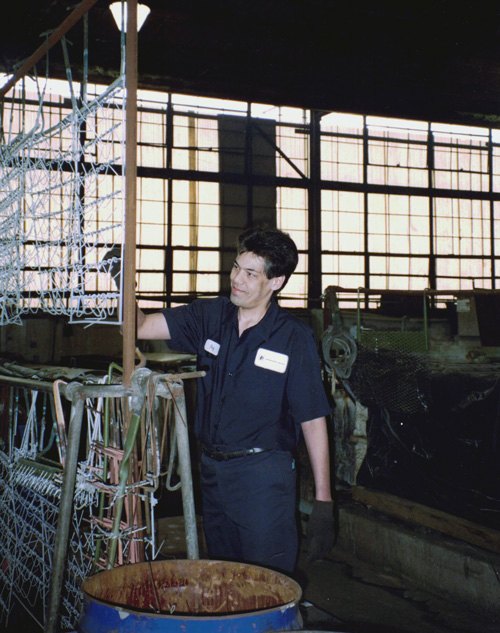
Mr. Roy Perez, a UWEP client, who joined in 1981, working at Industrial Plating Corporation in Seattle.
By July 1977, 14 graduates were employed and had collectively earned about $40,000. The same report stated that approximately 85 percent of trainees who had been placed remained employed. A March 1978 program summary reported 19 competitive food-service placements and approximately $78,600 in total earnings among graduates since the program began.
A five-year report documented continued growth. Between 1976 and 1981, 84 people entered the program, 56 completed training and entered employment, and 17 were still in initial training when the report was written. Program leaders argued that these results challenged long-standing assumptions about who could succeed in competitive employment.
The program also sought to extend its impact beyond UW. Staff shared training and follow-up methods with other organizations and encouraged the development of community-based vocational programs. By 1981, the report noted that three community colleges and one sheltered workshop in King County were offering training in real job settings that could lead to competitive employment.
From food service to individualized employment
Over time, the program expanded beyond food service. It became known first as the Employment Training Program and later as the UW Employment Program. Its services grew to include people with a broader range of developmental, physical, and cognitive disabilities and employment in many types of workplaces.
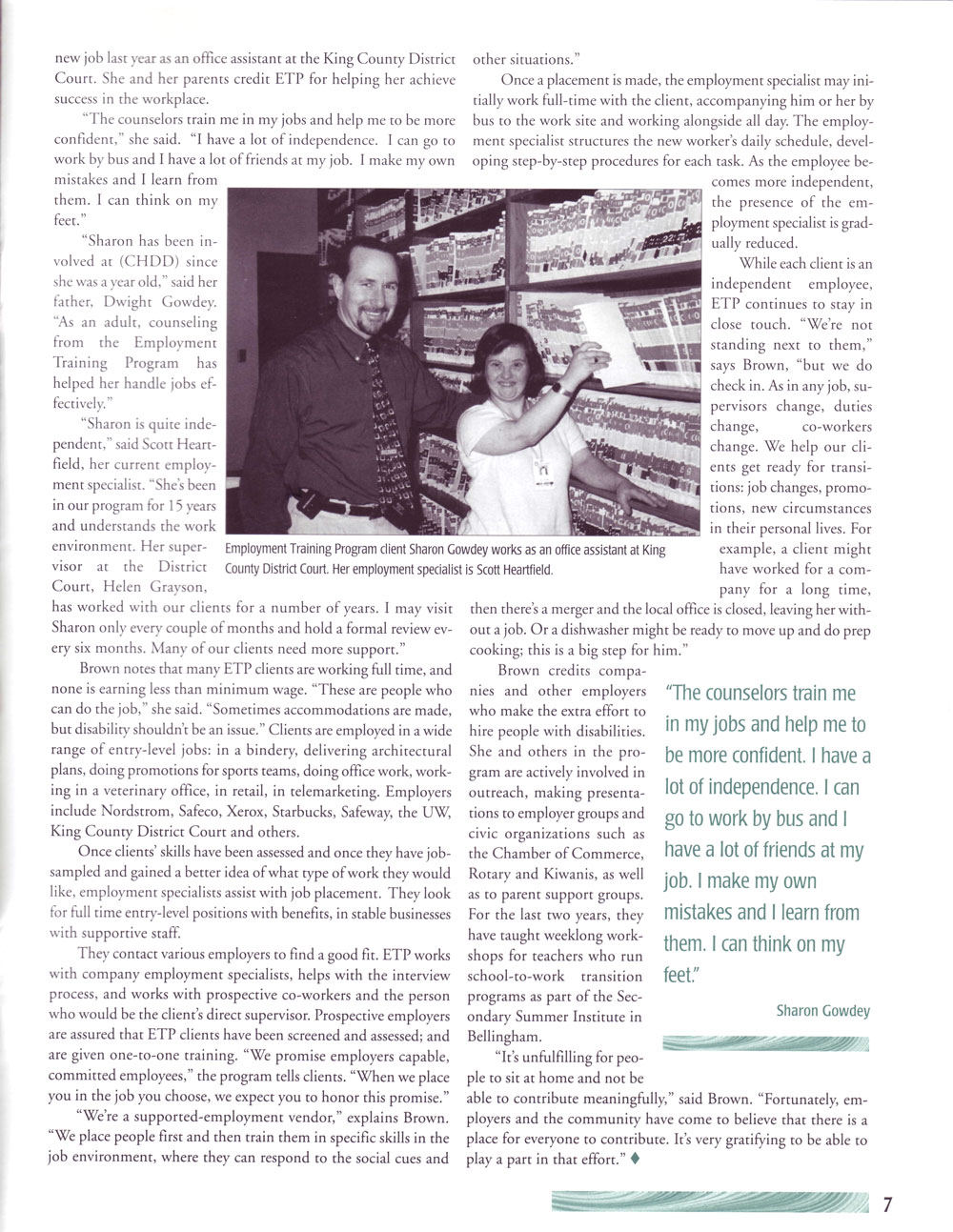
Read the full 2009 article, “Employment Training Program prepares people with disabilities for responsible jobs in the community.”
A 2009 IHDD publication described participants working in offices, retail, veterinary services, mail delivery, sports promotions, and other community jobs. It also emphasized participant choice. Employment specialists assessed each person’s strengths and preferences, helped identify a good job match and provided individualized training at the worksite.
The benefits of that support extended beyond the workplace. Sharon Gowdey, a longtime participant featured in the 2009 article, described how employment support helped her build confidence and independence. “The counselors train me in my jobs and help me to be more confident,” she said.
Another 2009 profile followed Jonel Bloxham as he began working as a mail clerk at IHDD. His employment specialist helped him identify his strengths, refine his employment goals and train for a position that matched his skills. His experience reflects an approach that remains central to UWEP: start with the individual, understand the workplace, and provide the support needed for both the employee and employer to succeed.
Building the next 50 years
Now a service provider for the Washington State Division of Vocational Rehabilitation and the King County Developmental Disabilities and Early Childhood Supports Division, UWEP continues to offer job development, placement, training, and long-term support for people with disabilities.
Its history reflects a broader transformation in disability employment: from demonstrating that people once considered unemployable could succeed in paid community jobs to recognizing employment as an important source of participation, independence and belonging.
As UWEP marks its 50th anniversary, we celebrate the contributions of participants, families, employers, staff members, and community partners who shaped its first five decades and look ahead as the program continues to build more inclusive pathways to employment.
Support Inclusive Employment
Help UWEP continue creating inclusive employment opportunities for people with disabilities by making a gift to the Gowdey Family Endowed Fund.
Make a gift through UW Medicine
UWEP Marks 50 Years of Inclusive Employment
From a campus restaurant training program to individualized employment services across the community, UWEP has spent five decades expanding opportunities for people with disabilities.
The University of Washington Employment Program (UWEP) is celebrating 50 years of helping people with disabilities prepare for, find and succeed in meaningful employment.
Today, UWEP works with adolescents and adults with developmental, physical, and cognitive disabilities. The program provides individualized assessment, job development and matching, on-the-job training, and long-term follow-up. Its employment specialists also work with businesses to identify employment needs, develop effective accommodations, and support employees after they are hired.
The program’s approach has evolved significantly since 1976, but its central purpose has remained consistent: to connect people with disabilities and employers in ways that benefit both.
A restaurant became a training ground
UWEP began as the Food Service Vocational Training Program at what was then the UW Child Development and Mental Retardation Center, now the Institute on Human Development and Disability. The program was developed in the mid-1970s, and its first documented job placement occurred in March 1976.
Mr. Shonta Daniels, a UWEP client, working at Pasta & Co. in Seattle.
Training began at the Center Restaurant, a cafeteria on the UW campus. Participants learned dishwashing, clearing tables, and kitchen maintenance while serving hundreds of lunchtime customers. The real-world setting allowed instructors to break complex jobs into teachable steps and help trainees build speed, consistency, and independence under conditions similar to those they would encounter in the workplace.
The curriculum extended beyond food-service tasks. Archival program materials describe instruction in punctuality, communication, grooming, money management, and public transportation. Participants progressed from the Center Restaurant to higher-volume UW cafeterias before moving into paid jobs with Seattle-area employers.
Support continued after placement. Staff analyzed each job, oriented supervisors, and coworkers, and initially worked alongside the new employee. As the employee gained skill and confidence, that support gradually decreased, while staff remained available when responsibilities, supervisors or jobs changed.
Early results challenged expectations
The program entered a labor market in which many people with intellectual disabilities had been excluded from competitive employment. An account of the program’s first year reported that 100 prospective employers surveyed in 1975 were initially cautious about interviewing graduates. Within a little more than a year, however, 15 employers had hired program graduates.
By July 1977, 14 graduates were employed and had collectively earned about $40,000. The same report stated that approximately 85 percent of trainees who had been placed remained employed. A March 1978 program summary reported 19 competitive food-service placements and approximately $78,600 in total earnings among graduates since the program began.
Mr. Roy Perez, a UWEP client, who joined in 1981, working at Industrial Plating Corporation in Seattle.
A five-year report documented continued growth. Between 1976 and 1981, 84 people entered the program, 56 completed training and entered employment, and 17 were still in initial training when the report was written. Program leaders argued that these results challenged long-standing assumptions about who could succeed in competitive employment.
The program also sought to extend its impact beyond UW. Staff shared training and follow-up methods with other organizations and encouraged the development of community-based vocational programs. By 1981, the report noted that three community colleges and one sheltered workshop in King County were offering training in real job settings that could lead to competitive employment.
From food service to individualized employment
Over time, the program expanded beyond food service. It became known first as the Employment Training Program and later as the UW Employment Program. Its services grew to include people with a broader range of developmental, physical, and cognitive disabilities and employment in many types of workplaces.
Read the full 2009 article, “Employment Training Program prepares people with disabilities for responsible jobs in the community.”
A 2009 IHDD publication described participants working in offices, retail, veterinary services, mail delivery, sports promotions, and other community jobs. It also emphasized participant choice. Employment specialists assessed each person’s strengths and preferences, helped identify a good job match and provided individualized training at the worksite.
The benefits of that support extended beyond the workplace. Sharon Gowdey, a longtime participant featured in the 2009 article, described how employment support helped her build confidence and independence. “The counselors train me in my jobs and help me to be more confident,” she said.
Another 2009 profile followed Jonel Bloxham as he began working as a mail clerk at IHDD. His employment specialist helped him identify his strengths, refine his employment goals and train for a position that matched his skills. His experience reflects an approach that remains central to UWEP: start with the individual, understand the workplace, and provide the support needed for both the employee and employer to succeed.
Building the next 50 years
Now a service provider for the Washington State Division of Vocational Rehabilitation and the King County Developmental Disabilities and Early Childhood Supports Division, UWEP continues to offer job development, placement, training, and long-term support for people with disabilities.
Its history reflects a broader transformation in disability employment: from demonstrating that people once considered unemployable could succeed in paid community jobs to recognizing employment as an important source of participation, independence and belonging.
As UWEP marks its 50th anniversary, we celebrate the contributions of participants, families, employers, staff members, and community partners who shaped its first five decades and look ahead as the program continues to build more inclusive pathways to employment.
Support Inclusive Employment
Help UWEP continue creating inclusive employment opportunities for people with disabilities by making a gift to the Gowdey Family Endowed Fund.
Make a gift through UW Medicine